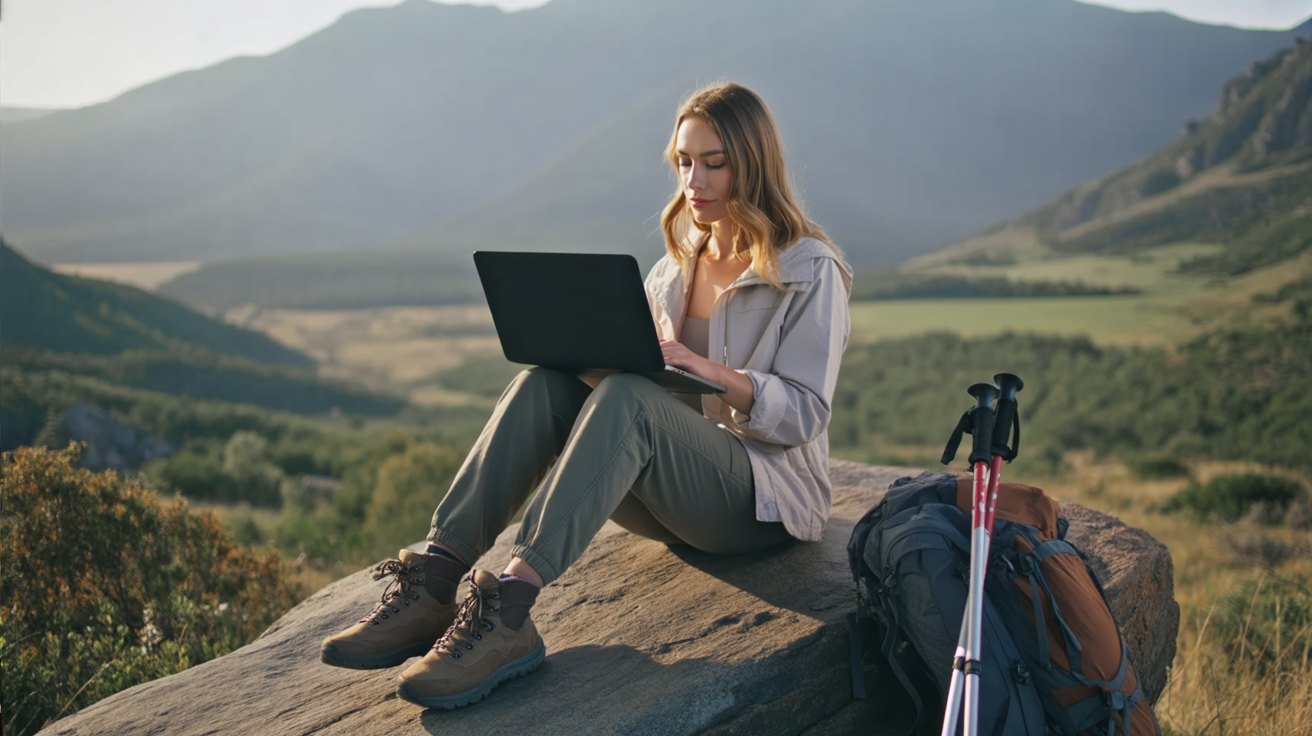
How I Combined Nomadic Hiking with Remote Work: My Experience
I still remember my first experiment with blending serious hiking and remote work. I had booked a week in Madeira, an island known as much for its cloud-swept ridgelines as its café culture. It felt like stepping into two lives at once: mornings spent on high mountain trails, afternoons anchored in city cafés with my laptop open. On paper, it looked seamless; in practice, it was a daily puzzle of stamina, Wi-Fi signals, and shifting priorities.
At dawn I’d climb staircases carved into basalt, headlamp cutting through mist, chasing the sunrise above Pico do Arieiro. By noon, I was back in Funchal, fingers flying across my keyboard as the smell of espresso and sea air filled the café. The contrast was exhilarating—but it also exposed how much planning this lifestyle actually demands. It wasn’t enough to love hiking or to rely on a strong internet connection. I had to rewire how I approached time, gear, and even recovery.
That week taught me more than I expected. Each trail revealed not just landscapes but lessons: what to carry, when to work, when to rest, and how to adapt when plans fell apart. Here’s what I learned about making hiking and remote work coexist without one breaking the other.
Choosing My First Nomadic Hiking Base
Picking the right base is the decision that makes or breaks nomadic hiking. I chose Madeira because it offered something rare: world-class trails that didn’t require cutting myself off from reliable internet or city comforts. The island’s geography worked in my favor. Within 45 minutes of Funchal, you can be standing on a volcanic ridgeline watching the sun rise, and within another hour, you can be back at a café with fiber Wi-Fi strong enough for video calls. That combination is gold for a nomad.
Funchal became my “office.” I booked a small apartment with decent space, walking distance from both cafés and the bus station. That detail mattered more than I realized—having transport nearby meant I didn’t waste hours just getting to trailheads. I quickly learned to check bus timetables and book sunrise shuttles in advance, especially for the Pico do Arieiro trail, which fills fast. Knowing that logistics were sorted gave me confidence to push harder on the trails without worrying about how I’d get back.
The apartment setup mattered, too. A comfortable desk, stable internet, and a supermarket down the street meant I could recover quickly and get back into work mode after hikes. When I compared this to friends who booked rural Airbnbs closer to the mountains, I saw the trade-off clearly: yes, they saved travel time, but they lost reliable Wi-Fi and easy access to amenities. For me, being based in Funchal struck the right balance between access to nature and a dependable workspace.
If I had to give advice to another nomad starting out, it would be this: don’t pick your base only for the trails. Look at it as a dual-purpose hub. Does it give you quick access to hikes, but also consistent internet, good food, and easy connections back to town? If not, you’ll spend more energy fixing problems than enjoying your hikes. Madeira taught me that the “office” side of the balance is just as important as the trail side—because if work falls apart, the freedom to hike disappears quickly.
Learning to Work Around Trail Hours
One of the first lessons I learned in Madeira was that trail hours aren’t negotiable—they dictate everything else. Hiking in the early morning isn’t just about catching golden light for photos. It’s when the air is cool, the trails are quiet, and your body has the energy to handle steep climbs. By 10 a.m., busloads of tourists start arriving, the sun sharpens, and the serenity that drew me to the mountains is gone. If I wanted the magic, I had to set my alarm before dawn.
That meant flipping my normal work rhythm. Instead of starting my mornings with emails, I treated sunrise as my first appointment of the day. I’d pack a light bag the night before, grab a taxi or bus to Pico do Arieiro, and be on the trail by 6 a.m. After 4–5 hours of hiking, I was back in Funchal by late morning, showered, and at a café with my laptop open by early afternoon. My “workday” ran from noon until evening, and surprisingly, I got just as much done—sometimes more—because I sat down with a clear head and a sense of accomplishment.
The shift wasn’t easy at first. I worried about missing emails or being offline during “normal” office hours. But most clients didn’t care as long as I delivered what I promised. What mattered was setting expectations and keeping communication clear. Once I explained my availability window, I was free to structure my day differently.
This rhythm also taught me to match task types with energy levels. Mornings on the trail gave me mental clarity, so afternoons were perfect for creative work like writing or brainstorming. Evenings, when I was more tired, became my time for admin tasks, responding to emails, or light editing.
For nomads considering the same lifestyle, the takeaway is simple: don’t fight the trail’s clock. Work will stretch or contract to fit, but the mountain doesn’t care about your calendar. If you adapt your schedule instead of resisting it, you’ll find a flow where both hiking and working coexist without constant friction. That adjustment was one of the biggest mindset shifts I carried forward from Madeira.
Realizing the Value of Light Gear
On my first hike in Madeira, I made the classic rookie mistake: I packed like I was moving house. A backup jacket, an extra pair of socks, multiple snacks, a heavy power bank, even a paperback book. The logic was simple—better to have too much than too little. But halfway up a steep ridge, my shoulders ached, my pace slowed, and I realized that every unnecessary item was stealing energy I’d need later, both for hiking and for work.
By day two, I stripped my pack down to essentials: 1.5 liters of water, a rain shell, a handful of snacks, my phone with offline maps, and a lightweight first-aid kit. That shift changed everything. My pace quickened, my body felt freer, and I actually enjoyed the hike instead of counting down until it was over. For a digital nomad, light gear isn’t just about comfort—it’s about sustainability. The less drained you are on the trail, the sharper you’ll be when you sit down to work afterward.
Technology taught me the same lesson. I didn’t need to lug my laptop everywhere “just in case.” If I knew I’d be offline until noon, carrying it up a mountain was pointless risk and weight. Instead, I kept it safe in my apartment and relied on my phone for navigation and quick notes. A slim sleeve or waterproof case was enough for the rare times I did bring it.
Multi-purpose items became my best friends: a buff that worked as a scarf, headband, or sun cover; a jacket that doubled as a windbreaker and rain shell; a power bank that could charge both my phone and my hotspot. Each item had to earn its place by doing more than one job.
The real takeaway? Hiking and remote work demand efficiency. Every ounce of wasted weight on the trail shows up later as fatigue at your desk. Once I embraced minimalism, I realized how much lighter both sides of the lifestyle became. The less you carry, the more energy you have for the things that actually matter—finishing the trail, meeting deadlines, and enjoying both without feeling like you’re constantly dragging yourself through the day.
Navigating Wi-Fi Challenges
Halfway through my week in Madeira, I was reminded just how fragile “remote” in remote work can feel. I was on a video call in a café when the Wi-Fi dropped without warning. The connection didn’t just stutter—it vanished. For a split second, I froze, imagining the worst: a frustrated client, a lost project, a reputation dinged because of something outside my control. Then I did what every nomad eventually learns to do—I switched to my backup. My phone’s eSIM became my lifeline, and within a minute the call was back on track. The client never knew the difference.
That experience taught me an important rule: don’t rely on any single connection. Cafés, co-livings, even apartments with “high-speed” promises can all fail. The only real peace of mind comes from redundancy. Now, I always carry two options: local SIM with hotspot capability and a café or apartment Wi-Fi. When one falters, the other takes over.
Offline prep is just as important. I started queuing tasks that didn’t require live connection—drafting blog posts, organizing files, editing photos—so if the internet died, I still made progress. It turned out to be a productivity boost; I was less distracted and worked more deeply when offline. Uploads, calls, and syncs could wait for a stronger signal.
Power management ties into this. Backup connections drain batteries fast, so a reliable power bank became essential. I kept my hotspot or phone charging while tethered to avoid the horror of losing both connection and device mid-task.
The mindset shift was just as valuable as the tools. Instead of panicking every time Wi-Fi wobbled, I began treating it as normal background noise of the lifestyle. Like rain on the trail, it wasn’t something to eliminate—it was something to adapt to. With a backup and an offline plan, those moments stopped feeling like crises and started feeling like minor bumps.
For digital nomads who hike, this flexibility is non-negotiable. You can’t control connectivity in every café or guesthouse, but you can control how prepared you are when it drops. Once you accept that, the fear of “what if I lose Wi-Fi” stops controlling your day. You hike lighter, you work calmer, and you realize the real freedom isn’t perfect signal—it’s confidence that you’ll handle it when it fails.
Balancing Social and Solo Time
One of the surprises of combining hiking with remote work is how much the social side affects your energy. In Madeira, I split my days between solo treks and group outings, and the contrast taught me that balance isn’t just about work and hiking—it’s also about people.
Solo hikes gave me clarity. Walking ridgelines alone, I could hear my own thoughts without interruption. Ideas for articles came easier, and I found myself solving work problems mid-climb that had felt impossible at the desk. The silence wasn’t lonely; it was spacious. My pace was my own, my rest stops unhurried, and I ended those days with a deep sense of focus that flowed straight into my work sessions.
But staying solo too long had its downside. Remote work is already isolating, and full days of silence on the trail sometimes left me craving connection. That’s when group hikes came in. Through local Facebook groups and hostel notice boards, I joined small meetups—3 to 6 people sharing snacks on cliffside ledges, swapping stories of where they’d come from and where they were heading. Those conversations were light but grounding. They reminded me that while I valued independence, I also needed community to stay emotionally balanced.
The trick was alternating. One day alone, one day with company, then a rest day for work-heavy tasks. This rhythm meant I never tipped too far toward isolation or overstimulation. And the social days often added unexpected value: trail tips, new café recommendations, or even future collaboration ideas from fellow nomads.
For anyone blending hiking with remote work, I’d say this: don’t underestimate the role of social energy. Hiking isn’t only physical—it’s also emotional. Too much solitude can wear you down, while constant company can leave you drained. Treat your social balance the way you treat your workload: adjust it, plan it, and honor what you actually need that week. Once I learned that, my days felt fuller and my work sharper, because I wasn’t neglecting one of the most important resources in this lifestyle—connection.
Finding My Recovery Rhythm
When I first started blending hiking with remote work, I assumed I could hike every day and still keep up with my normal workload. Madeira taught me quickly how unrealistic that was. After three consecutive dawn starts, steep climbs, and long descents, my legs were sore, my brain felt heavy, and my to-do list was untouched. It wasn’t lack of discipline—it was simply fatigue. Hiking and working both demand energy, and stacking them without recovery eventually empties the tank.
The solution wasn’t to stop hiking; it was to respect the role of recovery. I began scheduling “active rest” days: mornings spent strolling along Funchal’s waterfront instead of climbing ridges, afternoons in quieter cafés where I caught up on admin or lighter creative work. These pauses gave my body space to heal and my mind space to reset. By the next trail day, I was eager again rather than dragging myself out the door.
I also learned to listen for early signals of burnout: stiffness that lingered overnight, foggy focus at the laptop, or irritability on the trail. Those cues meant I needed more sleep, better food, or simply a slower pace. Even small changes—stretching before bed, hydrating more, or taking a nap after a hike—made a difference.
For nomads, the temptation is to maximize every destination. We want to see every trail, join every meetup, and still hit deadlines. But recovery isn’t wasted time; it’s the infrastructure that keeps you functioning. Without it, your work quality drops and your love for hiking dims. With it, you extend your stamina for both.
In Madeira, my week improved the moment I gave myself permission to slow down. Instead of cramming hikes into every free slot, I aimed for three major trail days, two lighter days, and two full recovery days. That rhythm let me stay consistent with work while still savoring the island. The lesson was simple but lasting: rest isn’t optional in a nomadic lifestyle—it’s what makes the lifestyle sustainable.
Embracing the Unexpected
No matter how carefully you plan, nomadic hiking will always surprise you. My last day in Madeira proved it. I had set my alarm for another sunrise ridge walk, only to wake up to heavy rain and a trail closure notice. My instinct was frustration—this was my final chance, and my schedule felt ruined. Instead of forcing it, I lingered in a bakery near my apartment, sipping coffee and chatting with the owner. She mentioned a small coastal path that would reopen later that afternoon once the weather eased. I followed her suggestion, and it turned into my favorite walk of the week.
That moment reshaped how I think about this lifestyle. Flexibility isn’t just a backup plan—it’s a superpower. Weather shifts, Wi-Fi cuts, transport delays, or new opportunities will always appear. Fighting them only adds stress. Adapting turns them into stories. If I’d clung to my original plan, I would have missed that quiet, rugged coastline, the scent of wet stone, and the unexpected kindness of a local pointing me toward it.
For remote workers, the same principle applies. Projects run late, meetings move, or connections drop mid-call. You can panic—or you can pivot. Having offline work queued, backup gear ready, or a “Plan B” hike in your pocket makes the difference between a ruined day and a rewarding one.
The key is reframing disruptions. Instead of seeing them as failures, treat them as invitations. A trail closure might lead you to a new café where you meet another nomad. A delayed upload could push you outside for an evening walk you wouldn’t have taken otherwise. Flexibility doesn’t just save you—it expands your experience.
Looking back, that rainy morning became the most memorable part of my trip. Not because it went to plan, but because it didn’t. And that’s the truth about nomadic hiking and remote work: the best days aren’t always the ones you schedule—they’re often the ones you allow.
Closing Thought
That week in Madeira taught me that freedom isn’t just about climbing mountains or opening your laptop wherever you please. It’s about learning to shape your days around both, without expecting either to run perfectly. Hiking gave me perspective, but it also forced me to respect limits—of time, of energy, of weather. Work gave me structure, but it also reminded me that productivity doesn’t mean filling every hour.
What surprised me most was how the two fed each other. The ridgelines cleared my head in ways no coworking session ever could, while the discipline of meeting deadlines kept me grounded enough to truly enjoy the hikes. I didn’t come away with a perfect system—I came away with a rhythm: early mornings on the trail, afternoons in cafés, evenings set aside for rest or connection.
Nomadic hiking isn’t about control. It’s about balance, and balance shifts daily. Some days you’ll nail it, some days you’ll fall short, and both are fine. The magic isn’t in mastering the dance but in choosing to keep moving to it. Somewhere between the peaks and the Wi-Fi, I realized that this lifestyle isn’t about doing it all—it’s about doing what matters, fully and with intention.