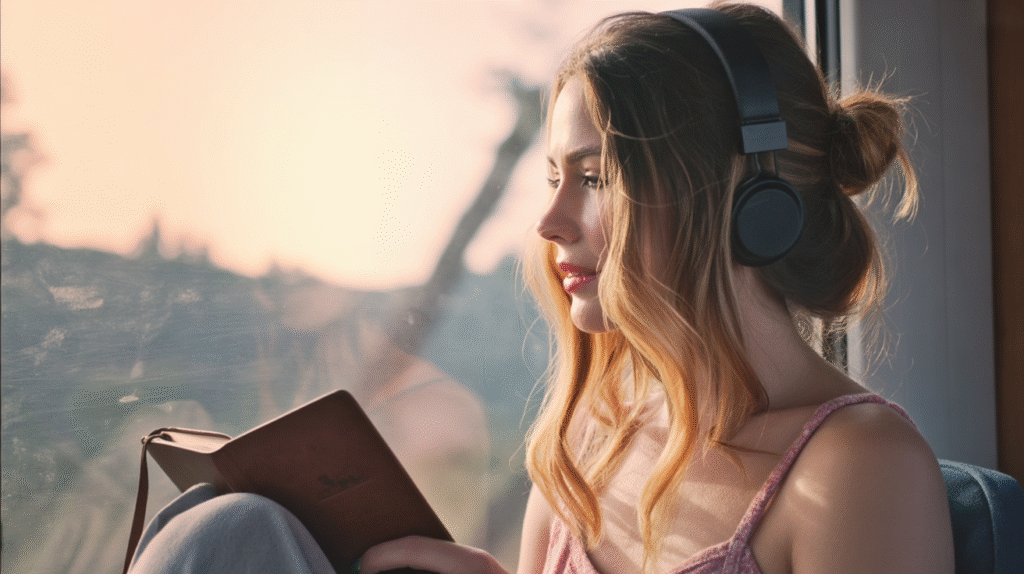
7 Reasons Slow Travel Makes You a Better Digital Nomad
If you’ve ever felt your passport filling faster than your heart, you’ll understand this: movement alone doesn’t always equal freedom. Many of us start nomad life like it’s a race — hopping borders, collecting sunsets, saying yes to every city as if stillness might catch us if we pause. But after a while, the thrill begins to thin. Your Wi-Fi works, but you don’t. Another perfect Airbnb greets you, yet the street outside feels anonymous, like déjà vu in a foreign tongue.
That’s when slow travel arrives like a quiet rebellion. It’s not about standing still — it’s about learning to linger. It’s about trading urgency for intimacy, letting places seep into your bones until they feel less like postcards and more like companions. Slow travel is the art of unhurried mornings, of knowing the baker by name, of feeling the rhythm of a neighborhood until it becomes your own.
Freedom, I’ve learned, is not in the constant chase. It’s in the choice to stop running. To stay long enough to notice how the light changes on your balcony each day — and to realize that presence is the most radical adventure of all.
1. You Stop Chasing, and Start Absorbing
Fast travel often feels like speed dating with cities. You swipe right on destinations, collect a few fleeting impressions, and then move on before the spark has a chance to deepen. It’s exciting at first — every new café, every skyline at dusk, every stamp in your passport feels like proof that you’re really living. But after a while, it blurs. The faces, the streets, the Wi-Fi passwords — they begin to mix together, like watercolors left too long in the rain.
Slow travel is intimacy. It’s the weight of the key to your rental pressing against your palm every morning. It’s recognizing the sound of the bakery shutters rolling up at dawn and knowing the first batch of bread will be ready in ten minutes. It’s memorizing the rhythm of footsteps on cobblestones, and realizing that your own have started to match.
There’s a shift that happens when you linger: your nervous system, often frayed by constant change, begins to settle. The mind softens, no longer scanning every detail as “new” or “unknown.” You stop being a visitor and start being part of the rhythm.
This is where presence begins. You sip your morning coffee slowly, no longer gulping it between check-ins. You notice how the barista’s smile changes depending on the song playing on the radio. You hear the bells in the square not as background noise, but as a reminder that time is unfolding gently around you.
Slow travel teaches you that beauty isn’t always in the big moments — the cliffside sunsets, the once-in-a-lifetime hikes. Often, it’s in the repetition. In the way the same door creaks when you push it open each evening. In the way the same neighbors nod to you as you pass by. In the way a foreign place transforms into something almost tender, simply because you gave it enough of yourself to notice.
🌿 When you stop chasing, you stop consuming places like trophies. You absorb them. They seep into your skin, your memory, your breath. And in return, they give you a kind of grounding no itinerary could ever promise.
2. You Get More Work Done — Without Burning Out
When you’re always in motion, your brain is burning energy on questions that have nothing to do with your work. Where am I sleeping tonight? What’s the Wi-Fi password? Where’s the nearest grocery store, the nearest pharmacy, the café that won’t mind me lingering with a laptop? Each move resets the puzzle. And while adventure feels intoxicating, the invisible cost is focus. Your creativity is scattered, parceled out to logistics instead of flowing into the work you came here to do.
Staying longer quiets that noise. The questions fade, replaced by small certainties. You know where to find strong coffee and steady Wi-Fi. You recognize which chair by the coworking window catches the best morning light. The barista knows your order before you speak. That repetition isn’t boring — it’s liberating. With fewer decisions to make, your mind has space to stretch. Ideas arrive more fluidly. Projects that once felt heavy begin to feel like water running downhill.
Slow travel doesn’t just protect your productivity — it deepens it. The steadiness of your surroundings becomes a kind of container, holding you steady while you dive into deep work. Hours slip by without strain, because your body and mind are no longer busy adjusting to yet another new setting.
There’s a rhythm in this kind of living that feels like alignment. Work in the morning, wander in the afternoon, return to familiar streets in the evening. Your output stops competing with your travels; the two start moving in harmony, each feeding the other instead of draining.
And the best part? Burnout loosens its grip. When your nervous system isn’t constantly jolted by airports, check-ins, and new maps to memorize, your energy replenishes faster. You rest more deeply, and your work reflects that fullness.
🌿 Productivity, it turns out, isn’t about cramming more into less time. It’s about creating conditions where your focus can flourish. Slow travel gives you that gift: stability wrapped in freedom, structure wrapped in possibility. The longer you stay, the more you’ll realize that working well doesn’t mean working harder — it means working from a place of ease.
3. You Spend Less (and Live More)
Fast travel often feels like feeding coins into a slot machine. Nightly rentals, last-minute trains, airport snacks, endless café meals — each small purchase adds up until your budget starts to feel like it’s evaporating. There’s a constant sense of urgency: “I only have a few days here, so I should try everything.” And urgency is expensive.
Slow travel changes the equation. A monthly rental costs less than half of what you’d pay night by night. Cooking at home suddenly makes sense because you actually have time to fill the fridge. You find yourself wandering through the local market, learning which vendor has the sweetest tomatoes, which stand sells herbs wrapped in newspaper still fragrant from the morning harvest. You start to notice that the “cheap” choice isn’t a rushed sandwich near a train station — it’s the joy of stirring your own pasta sauce in a small kitchen, windows open to the night air.
It’s not just about saving money. It’s about shifting from consumer to participant. You’re no longer paying tourist prices because you stop living like a tourist. Instead of racing to the next highlight, you begin to value the quieter luxuries: the café where you linger long enough to become a familiar face, the small bakery where you buy bread before it sells out, the evening glass of wine shared with neighbors on a terrace.
And something remarkable happens — life becomes richer even as your expenses shrink. Without the pressure to cram every experience into a few days, you stop overspending on urgency. You start savoring instead of stockpiling. The memory of cooking a market-fresh meal or sharing fruit with a neighbor lingers far longer than the receipt from an overpriced tour.
🌿 Slow travel teaches you that abundance isn’t found in rushing through places — it’s in rooting, however briefly, into the daily rhythm of a place. You spend less because you’re finally living more.
4. You Build Deeper Relationships
When you’re moving quickly, every encounter feels like a spark that flickers and fades before it has the chance to catch. You exchange names with the barista, smile at your Airbnb host, trade a few words with a fellow traveler — but then you’re gone. Your contact list fills with acquaintances, but your heart still aches for belonging.
Slow travel rewrites that story. When you linger, faces turn into familiar presences. The woman at the corner shop begins to ask how your week is going. The yoga teacher greets you by name and tells you about the hidden trail up the hill. The neighbor’s dog starts wagging its tail when it sees you because you’ve walked past enough times to be remembered.
This repetition builds something profound: trust. People open up when they know you’ll be around tomorrow, and the day after, and maybe the week after that. Suddenly, you’re not just a stranger passing through — you’re part of the fabric, however loosely woven. You get invited to Sunday lunches, rooftop gatherings, or local celebrations you never would have found scrolling through a guidebook.
And these connections anchor you. They turn faraway places into temporary homes, softening the loneliness that can creep in when you’re always on the move. The conversations linger, not because they’re grand or extraordinary, but because they’re rooted in shared rhythm: the same café table, the same sunrise walk, the same nod across the market stall.
🌿 In fast travel, people are part of the scenery. In slow travel, they become the story. And those friendships — tender, imperfect, fleeting yet meaningful — remind you that home isn’t a fixed address. Sometimes, it’s simply where someone smiles at you like they’ve been expecting you all along.
5. You Learn the Art of Presence
Fast travel puts you on someone else’s clock. Flights to catch, check-out times to meet, itineraries to squeeze in before the week runs out. Even when you’re standing in front of beauty, part of your mind is elsewhere — already calculating the next move.
Slow travel unravels that urgency. With no departure looming, time stretches open. You wake without an alarm, eat without rushing, and walk without measuring how far you’ll get. At first, the stillness can feel strange, almost indulgent. But then you notice how it softens you.
You begin to see the small details you used to skim past: the way morning light drapes itself across your balcony, the sound of church bells echoing at different pitches depending on the wind, the quiet ritual of the neighbor watering her plants each evening. You eat a meal not as a pit stop but as an experience — pausing to taste, to linger, to be part of the moment instead of sprinting through it.
Presence isn’t a lofty concept here. It’s a daily practice woven into the pace of the place. And the more you lean into it, the more your nervous system learns that life doesn’t have to be lived in fragments.
Slow travel doesn’t erase responsibility or ambition; it anchors them. When you’re present, your work feels more intentional, your relationships more genuine, your days less like a blur and more like chapters.
🌿 To live slowly is to remember that this moment — the coffee cooling on the table, the sky shifting colors above you, the quiet rhythm of your breath — is enough. And in learning to be here, now, you discover a kind of freedom that no plane ticket could ever buy.
6. You Live More Sustainably
When you’re racing from one place to another, your footprint grows heavier than you realize. Every flight, every disposable coffee cup grabbed between trains, every hurried takeout wrapped in plastic leaves a trail. Fast travel doesn’t give you time to integrate — you consume what’s convenient, then move on.
Slow travel shifts the rhythm. Staying longer means fewer flights, fewer buses, fewer frantic purchases on the go. It gives you the space to adapt to the natural pace of a place. You start eating what’s in season because you’re around long enough to notice the cycle of the markets. You buy from family-run shops, not just because they’re charming, but because you know the owners now — they greet you, recommend what’s freshest, tell you stories about where it came from.
Your habits simplify. You carry a reusable bag because you know you’ll be back at the same stall tomorrow. You refill your bottle at the café you return to daily. You swap Uber rides for walking routes that slowly etch themselves into your memory. The more rooted you become, the lighter you move.
And sustainability isn’t just about the planet — it’s about you. There’s a deep alignment in living in a way that matches your values. The constant friction of acting against what you believe — rushing, wasting, consuming — fades. Instead, you feel congruence: your choices nurturing both the place and yourself.
🌿 Slow travel teaches you that caring for the world isn’t about grand gestures. It’s about intimacy — knowing a place deeply enough to respect it, moving through it gently enough to leave it as whole as when you arrived.
7. You Rediscover Freedom in a New Way
At first, freedom feels like movement — the thrill of waking in one country and falling asleep in another, of filling your passport with proof that you’re alive and unbound. But after a while, that kind of freedom starts to taste like obligation. Another flight, another check-in, another round of logistics dressed up as adventure.
Slow travel offers a different kind of liberation. Freedom stops being about how many borders you cross and starts being about how deeply you inhabit your days. It’s the freedom of waking up without pressure. Of deciding whether today will be for work, for wandering, or for simply existing in the quiet spaces in between.
When you linger, you learn that freedom isn’t measured in miles — it’s measured in breath. It’s the deep inhale on a balcony at sunrise, robe wrapped loosely around your shoulders, mountains stretching into the horizon. It’s the exhale of knowing you don’t have to rush anywhere. The most radical choice becomes staying — choosing presence over pursuit.
And in that choice, you rediscover what freedom really means. Not escape, not accumulation, but alignment. A life where your schedule bends to your energy, your work supports your wanderings, and your days feel full without being frantic.
🌿 Slow travel whispers the truth most of us forget in the chase: freedom isn’t out there, waiting at the next stop. It’s here, in the softness of your own pace.
Closing Thought
In a world that glorifies speed — more stamps, more stories, more proof of movement — choosing to slow down is an act of quiet defiance. Slow travel is not about doing less; it’s about experiencing more fully. It’s the pause that lets you taste the food instead of photographing it, the stillness that lets you hear the heartbeat of a place instead of just passing through.
As digital nomads, we have a rare privilege: we can shape our own pace. We don’t have to follow the frantic itineraries of vacationers. We can choose to linger, to let a single town, a single street, or a single sunrise become familiar. And in that familiarity, we rediscover something we often lose in the chase: ourselves.
Slow travel doesn’t mean giving up adventure. It means letting adventure unfold softly, steadily, like the light changing over your balcony each day. It means building a life where your work, your connections, and your sense of wonder coexist without competing.
So here’s the invitation: stay.
Stay long enough to let a place seep into your bones, long enough to feel rooted even while moving. Because sometimes the greatest freedom is not running — it’s resting, deeply, in the moment you’re already in.