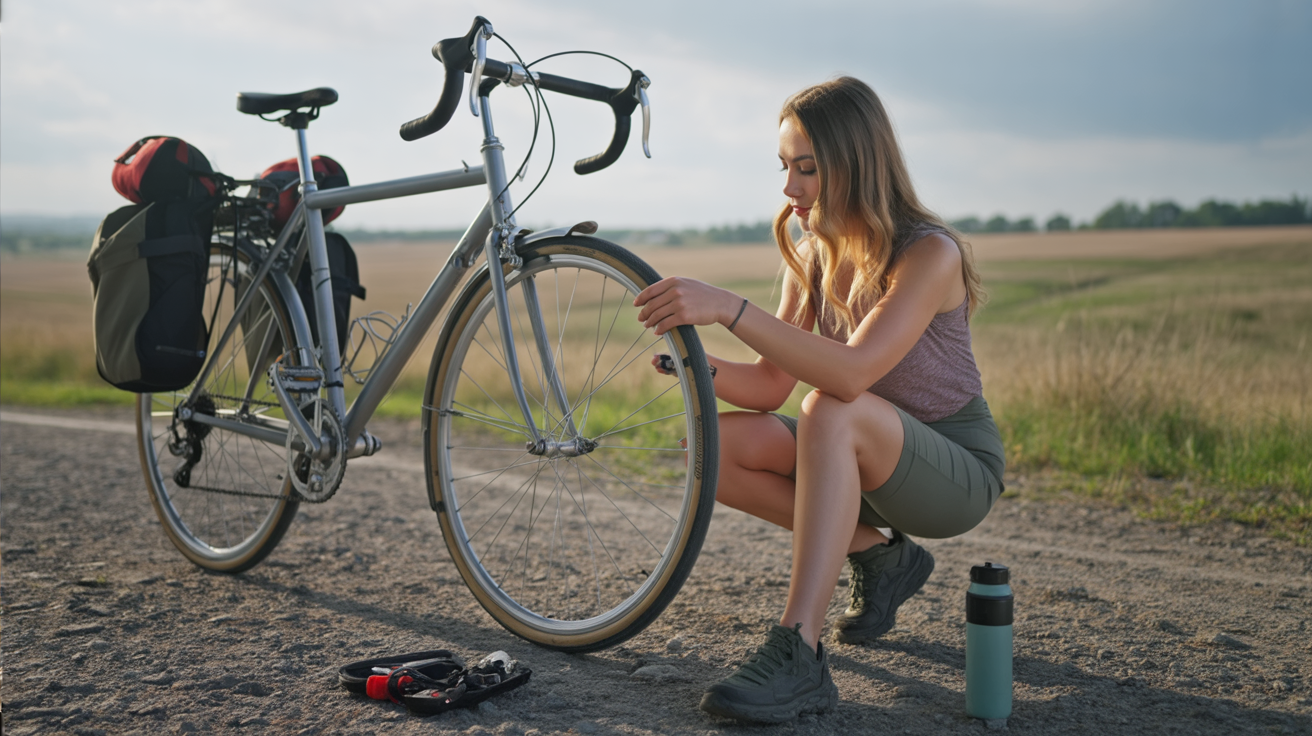
9 Mistakes to Avoid When Embracing Digital Nomadism by Bicycle
The romance of crossing borders by bike—laptop in one pannier, curiosity in the other—is hard to resist. Yet beyond the postcard moments is a rhythm that asks more of you than a simple commute: planning routes around weather and Wi-Fi, tracking calories and cadence, navigating new languages with legs already tired. Bike-based nomadism isn’t just a moving backdrop for remote work; it’s a practice of endurance, attention, and gentle self-management.
What turns the ride from fragile to sustainable isn’t perfection or expensive gear; it’s a handful of choices made early and repeated often. Pacing instead of pushing. Tools that actually fit your route. Work rhythms that respect the body that carries your business. Leave room for the unplanned delight—a bakery at kilometer 12, a lake you hadn’t marked, a conversation at a roadside stand—and you’ll keep the spark that brought you here.
This guide gathers the pitfalls riders meet most often and the simple shifts that prevent them from snowballing into burnout. Take what serves you, adapt the rest, and remember: progress on a bicycle is measured in quiet, accumulating kilometers. The point isn’t to conquer the map; it’s to keep rolling with enough energy to enjoy what you find.
Underestimating How Physically Demanding It Is
Cycling 30–60 km daily while keeping up with clients sounds doable on paper; in practice, continuous effort stacks quickly. Your legs feel yesterday’s climbs during today’s headwinds. Your neck remembers last night’s tent pillow when you hunch over a laptop at a picnic table. Even if you ride recreationally at home, stringing days together—while navigating food, water, sleep, and screen time—changes everything. Many first-week failures come from treating the tour like a sprint and work like an afterthought.
Start with a ramp, not a leap. Give your first 7–10 days conservative targets: fewer kilometers, flatter routes, lighter bags. Schedule true rest days—no riding, minimal laptop time, actual sleep. Let your body adapt to the double load: cardio plus cognitive. If you must work heavy hours, shrink riding to recovery spins. If you’re crossing mountains, make your calendar feather-light.
Training before departure helps more than new gadgets. Build long “back-to-back” rides on weekends, add core work and mobility, and experiment with fueling (carbs + electrolytes) at the cadence you’ll maintain on tour. Practice a post-ride routine—stretch, protein, feet up for 20 minutes—so it becomes automatic when tired brainpower is low.
The paradox: slowing down early gets you farther later. Sustainable pace protects the two assets that matter most—your body and your enthusiasm—so both are still with you at the border, and the next one after that.
Choosing the Wrong Gear for Your Route
Gear fails not because it’s “bad,” but because it doesn’t match the terrain and climate you’ll actually ride. Slick city tires on farm tracks; rim brakes on long alpine descents; ultralight summer kit on shoulder-season rain; a beautiful frame with no mounts for water or racks. Mismatch creates discomfort first, then friction, then expensive replacements you chase from town to town.
Reverse-engineer from conditions. Study surfaces (asphalt, gravel, sand), gradients, and weather bands month by month. Then choose: tire width and tread for grip and puncture resistance; gearing low enough to spin on climbs when loaded; brakes that won’t fade on long downs; bags that won’t swing under wind or ruts. If your route is mixed, a robust gravel setup (38–45 mm tires, tubeless if possible) often hits the sweet spot.
Try a shakedown weekend with full weight: climb, descend, ride in drizzle, and set up camp. Note hotspots, rattles, where weight should shift. Add the unglamorous bits that save tours: quality pump, tire boots, spare links, brake pads, a multi-tool with chain breaker, fiber-fix spoke, and zip ties. Waterproofing matters more than you think—dry bags, fender options, and a simple rain cover for your saddle and bar tape.
Good fit is safety. A professional bike fit or careful DIY tweaks (saddle height/tilt, reach, bar width) prevent numb hands and aching knees. The right kit won’t make headwinds disappear, but it keeps problems small enough to solve—so your attention stays on the ride, not the repairs.
Trying to Work and Ride on the Same Day—Every Day
The fantasy: dawn ride, midday meetings, sunset editing, stars overhead. The reality: legs heavy at 3 p.m., mind fuzzy on a call, rushed camp setup in the dark. Physical exertion taxes cognition; stack both daily and the quality of each erodes. It isn’t weakness—it’s biology.
Design a cadence that honors both roles. Create A-days and B-days: A for riding (longer distances, minimal screen time), B for work (stationary or short spins, deep focus windows). Cluster client calls and deliverables on known Wi-Fi days in towns with libraries or coworking. If the route forces daily movement, shorten rides on heavy workdays: 20–30 km recovery spins to keep the ritual without draining the tank.
Protect mental bandwidth. Use templates and checklists for recurring tasks. Draft offline during flight-mode hours (notes app, markdown editor) and sync when connected. Keep a “parking lot” note for ideas mid-ride so your brain can drop them and return to scanning the road.
Most importantly, defend margins. No evening rides after stacked calls. No big deliverable the morning after a summit day. When both riding and working matter, neither can live on leftovers. Alternating focus doesn’t slow you down; it makes the whole journey feel human—and the work better for it.
Not Learning Bike Repair Basics Beforehand
Mechanical issues on tour aren’t hypotheticals—they’re calendar items that haven’t announced themselves. Flats find you on cold shoulders. Chains skip under load when you least want to stop. Brake rub appears right as the descent begins. Waiting for the “next shop” can mean hours of walking or a risky limp to town. Skills you learn at home turn crises into chores you can handle with calm.
Master the essentials: patch or replace a tube; seat a stubborn tire bead; straighten a bent derailleur hanger enough to shift; clean and lube a gritty chain; adjust cable tension for brakes and gears; replace brake pads; tighten bolts to stop creaks before they turn to failures. Watch tutorials, then practice with your actual bike and tools—eyes closed if you can—to build muscle memory.
Carry what competence requires: quality patches, two tubes, boot material, multi-tool with chain tool, quick link, mini pump you trust, small lube, rag, a spare brake pad set, and a few zip ties and tape. Add nitrile gloves for cold/oily fixes. Store a “how-to” note offline on your phone for torque values and steps.
The point isn’t to become a mechanic. It’s to avoid the learned helplessness that drains morale. When you know you can fix the most common problems, your route can stretch quieter, your timing can relax, and your confidence can ride ahead of you.
Overplanning Every Kilometer
Meticulous plans feel comforting—colored GPX lines, hourly ETAs, camps booked in advance. Then weather stalls you, a bridge closes, or you find a village you can’t bear to leave. Overplanning turns delights into disruptions and makes every deviation feel like failure. Touring thrives on wiggle room.
Plan in layers, not locks. Define weekly arcs (north to X by Sunday) and daily ranges (40–70 km) instead of fixed numbers. Star multiple camp options per zone: official sites, a warmshowers host, a wild-camp backup where legal. Note resupply towns but allow detours for local tips. Treat headwinds and rain as valid reasons to stop early, not moral tests to push through.
Leave “blank days” each week for slip or serendipity. Use them when storms roll in, a café chat turns into a village tour, or your body asks for quiet. Build administrative slack: a half-day for laundry, gear checks, route updates.
Flexibility is not laziness; it’s respect for the unknown. The road is a co-author. Give it space to edit, and you’ll come home with stories—and a body—that still love the bike.
Relying Too Heavily on Solar or Unreliable Tech
Solar panels look like independence in a flatlay, but forests, short winter days, fog, and rain flatten output. Counting on sunshine to power work deadlines invites stress the first week clouds linger. Likewise, single-point-of-failure gadgets (one cable, one bank, one adapter) introduce fragility into days that already require resilience.
Design redundancy. Two power banks (one charging while one works), two charging cables for each critical device, and a small wall charger you trust. Use solar as a supplement on bright, static days—great for topping up—rather than your only source. Map cafés, libraries, and camps with outlets along your route and set a “charge to 100%” rule whenever you stop.
Shift apps to offline-first: maps downloaded, music/playlists cached, reading queued, docs available offline with versioning. Batch uploads for strong-signal windows. Keep a printed mini-card with critical info (emergency contacts, major logins hint, bike serial) in case phones fail.
Tech should make the ride lighter, not hold it hostage. When power and access are designed with Plan B baked in, weather becomes scenery again—not a countdown timer on your screen.
Ignoring Nutrition and Recovery Needs
A body that moves your house and your job needs more than pastries and caffeine. Underfueling shows up as irritability, foggy decision-making, and knees that protest climbs. Overreliance on sweets spikes and crashes your effort; dehydration masquerades as fatigue and headaches; skipped mobility turns tightness into injury. You don’t need a sports lab—you need steady basics.
Aim for rhythm: carbs early and often on the bike (fruit, bars, rice cakes), protein within an hour post-ride, electrolytes in warm weather or long days. Keep a simple “always carry” kit: nuts, a banana, two bars, electrolyte tabs. In towns, prioritize a vegetable + protein meal and restock real food—yogurt, eggs, lentils, fresh produce.
Recovery is half the ride. Ten minutes of mobility focused on hips, calves, and back prevents issues that derail weeks. Elevate legs against a wall, breathe slowly, and let your nervous system step off the gas. Sleep trumps late-night scrolling; a dark eye mask and earplugs can mean two more hours of quality rest in a tent or hostel.
Listen early. A twinge today is a warning; tomorrow it’s a route change. Treat food, water, and recovery as non-negotiables, and you’ll find the engine—your engine—runs quieter, stronger, longer.
Neglecting Community and Mental Health
Solitude on a bike can feel like medicine—until it edges into isolation. Days without conversation beyond “coffee, please,” nights where the only light is your headlamp, a string of gray weather—mood dips creep in. Work compounds it: asynchronous messages, time zones, the absence of office banter. Mental health isn’t a side quest; it’s the road you’re on.
Build connection on purpose. Schedule weekly calls with a friend who “gets it.” Join local group rides when passing through cities. Use platforms where riders gather to trade routes or meet for a café. When reception is scarce, keep a journal—three honest lines anchor your inner world when the outer one is vast and changing.
Mindset tools travel light: short meditations, breathwork, a gratitude list at camp, a “rose/thorn/bud” reflection. Protect bright spots—music you love, a playlist for climbs, a favorite podcast saved offline. If loneliness persists, shorten the gaps between towns or plan a week of slower miles with more human touchpoints.
Strong does not mean alone. Community—both on the road and back home—keeps the ride humane, your work more creative, and the hard days survivable.
Believing You Have to Be Perfect to Start
Waiting for perfect fitness, the ultimate titanium build, or a route free of unknowns delays the only teacher that matters: doing it. The first week will revise your packing list; the second will rewrite your schedule. No article can hand you your exact cadence—you discover it wheel by wheel.
Start with “good enough.” A bike you’ve serviced and tested. Bags that hold what you need without maxing your patience. A route that offers bail-outs and shorter options. Begin near home with a two-night shakedown, then stretch. Each micro-tour becomes data: what rubbed, what you never used, what you craved.
Adopt a scientist’s lens. Iterate rather than judge. Replace one item per week, refine one habit per ride. Celebrate small wins—a smoother shift, a kinder pace, the first day you end with energy to watch the sunset.
The ride rewards curiosity more than control. Start before you’re ready, stay humble, keep adjusting. Confidence isn’t packed; it accrues—quietly, then all at once—until one morning you realize you’ve become the person you were waiting to be.
Closing Thought
Bike-based digital nomadism isn’t the fastest way to cross a map, but it might be the richest. You feel the contours of countries in your legs, measure towns by bakeries and fountains, and watch work weave itself into the simple rituals of moving and resting. Mistakes will happen; they’re proof that you’re learning out loud.
Avoiding the common traps—pacing too hard, planning too tight, trusting sun more than systems—won’t make your path flawless, but it will make it freer. Keep your kit honest, your schedule humane, and your spirit open to detours. Stay fed, stay curious, stay connected.
Most of all, let the road teach you—about resilience, about being enough, about how little you need to feel abundantly alive. Stronger legs will come. Sharper workflows will come. What you carry home is the quiet knowledge that you can build a life in motion and still feel grounded, one deliberate kilometer at a time.