Why Solitude Is Your Path to Self-Discovery
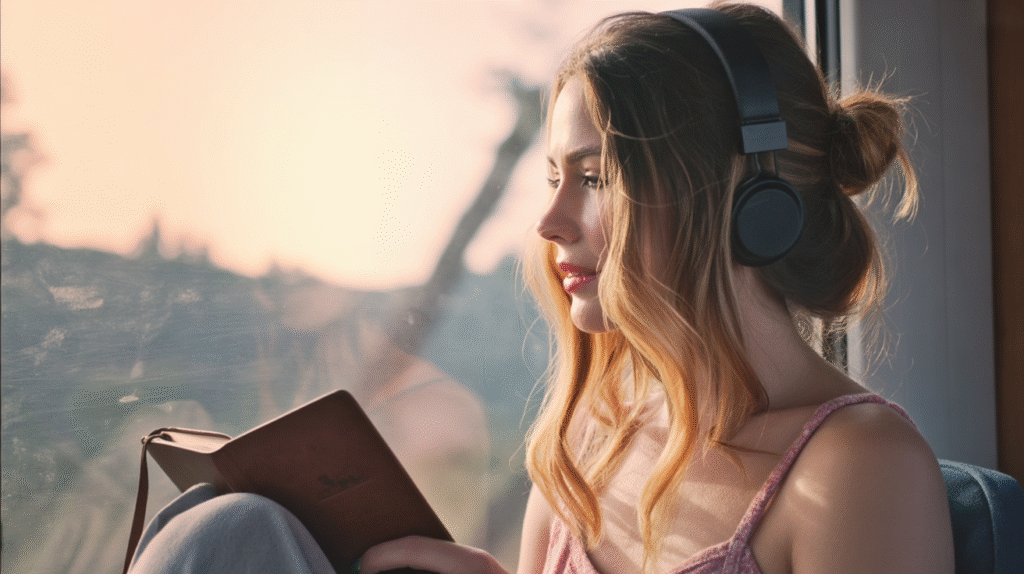
There’s a special kind of clarity that only arrives in stillness. No one watching. No one validating. Just you—in a quiet room in a country where no one knows your name, peeling back the layers of who you thought you were. Solitude isn’t emptiness. It’s invitation. And when you learn to sit in it, soften in it, stay in it—you start to hear the voice that’s been waiting underneath it all. Your own.
Solitude Strips Away the Noise
When no one’s around to influence your choices, you begin to notice which ones are actually yours. What you eat. How you move. What you care about. Solitude becomes a mirror that gently reflects your real voice back to you.
I felt this one morning while sitting alone at a small table in a café. No one was asking where I wanted to go next, no one had an opinion about what I should order. For the first time in weeks, I noticed what I actually wanted: a simple cup of tea, not the trendy drink everyone else ordered. That tiny choice felt strangely profound. It wasn’t about the tea—it was about realizing how much of my life had been shaped by noise I didn’t even notice until it was gone.
Solitude strips away the chatter of other people’s preferences and expectations. It leaves you with something quieter, something truer.
When you sit in the stillness, you begin to hear your own desires clearly. And those small, honest choices are what slowly bring you back to yourself.
You Start to See Yourself More Clearly
Alone time reveals the patterns you’ve inherited but no longer need. The stories you’ve outgrown. The beliefs that don’t belong to you. In solitude, you’re not performing—you’re witnessing. That’s where self-awareness begins.
I noticed this while journaling one evening in a quiet guesthouse. My pen started tracing sentences I didn’t expect, like: “I don’t actually care about this goal anymore.” It was startling—realizing how much I had been carrying dreams that weren’t even mine, ones I had absorbed from other people’s definitions of success. In the quiet, those borrowed stories finally came into focus, and I could see which ones it was time to release.
Solitude offers clarity no conversation can give. Without the reflection of others, you become your own mirror. You see what still feels true, what feels heavy, and what you’re ready to outgrow.
And in that seeing, you find freedom—the freedom to shed what no longer belongs to you and to step closer to the person you’ve been becoming all along.
Solitude Builds Inner Safety
When you’re alone and still feel safe, still feel whole, something shifts. You stop chasing validation. You learn to regulate your own energy. You discover that you can hold yourself through the full spectrum of your feelings—without needing anyone to fix them.
I felt this shift during a stormy night in a tiny apartment, the kind where the walls rattled with wind. My old self would have panicked, texting someone for comfort. But instead, I lit a candle, made tea, and reminded myself I was safe. Slowly, my body calmed. By the time the storm passed, I realized something profound: I didn’t need someone else to make me feel secure. I had learned to hold myself.
Inner safety doesn’t arrive all at once—it’s built in moments like these. When you comfort yourself through fear. When you celebrate your wins alone. When you feel sadness and don’t push it away.
The safety you build within yourself becomes a quiet foundation. It doesn’t mean you’ll never need others. It just means you’ll never abandon yourself again.
Alone, You Get to Recreate Yourself on Purpose
When you travel alone, there’s no script. No one’s expectations to meet. That means you get to choose how you show up. Who you become. What version of you you want to step into next. Solitude isn’t absence—it’s creative power.
I noticed this the first time I arrived in a city where no one knew my name. There was such freedom in that anonymity. I could choose to be more curious, more open, more direct. I didn’t have to fit into the roles people had assigned me back home. I tried on new rhythms, experimented with saying no faster, yes softer. Little by little, I felt myself stepping into a version of me I had always wanted to be—but hadn’t given myself permission to explore.
Solitude gives you a rare gift: the chance to rewrite. To play. To discover sides of yourself that may have been hidden under familiarity.
Being alone isn’t just about space—it’s about possibility. It’s the blank canvas where you get to paint yourself, again and again, on purpose.
In the Quiet, You Realize You Were Never Lost
What you were looking for? It was never out there. It was always in the pause. In the journal entries. In the quiet mornings with your feet on the cold floor and your thoughts finally catching up. Solitude helps you remember.
I once spent a week in a small cabin with no WiFi, just me, my notebooks, and the sound of the wind in the trees. At first, I felt restless, reaching for distractions that weren’t there. But as the days unfolded, I began to notice a quiet truth rising: I wasn’t lost at all. I had simply been too busy to listen. My desires, my clarity, my peace—they had been waiting beneath the noise.
Solitude doesn’t hand you something new. It reveals what’s always been within you.
When the world quiets and you finally hear yourself again, you realize you weren’t missing after all. You were simply waiting to be remembered.
Feel Right at Home Everywhere
At first, being alone can feel like disconnection. No familiar voices, no instant comfort. But over time, solitude shows you that belonging doesn’t only come from others—it can come from within. When you learn to anchor in yourself, you begin to feel at home wherever you are.
I felt this one afternoon sitting on the steps of a plaza in a city I had just arrived in. I didn’t know anyone. The conversations around me blurred in a language I couldn’t understand. For a while, I felt invisible. But then, something softened. I noticed the warmth of the stone under me, the rhythm of footsteps, the simple sweetness of a pastry in my hand. Belonging wasn’t about being recognized—it was about letting myself arrive.
Solitude is what turns foreign into familiar. It reminds you that home is not a single place or person—it’s a relationship with yourself.
And once you carry that kind of belonging inside, you can sit anywhere in the world and feel whole.
Make Space for Your Creativity to Breath
When you’re surrounded by voices, your ideas can get tangled with expectations. Solitude clears the air. It gives your creativity space to stretch, to wander, to arrive without judgment.
I once spent a weekend alone in a small cabin, no WiFi, no noise except the crackle of the fire. At first, the silence felt intimidating. But soon, words started pouring into my journal. Ideas I hadn’t made space for in months came rushing back—fresh, unfiltered, mine. Without anyone else’s input, I could finally hear myself think.
Creativity needs solitude the way seeds need soil—quiet, dark, fertile. It doesn’t mean isolation forever, but it does mean giving yourself room to create without performance.
In solitude, you stop editing before you’ve even begun. You let the ideas arrive messy, raw, true. And that’s where your most authentic work is born.
Closing Thought
Solitude isn’t loneliness—it’s listening. It’s where you reconnect with the voice beneath the noise, the softness beneath the striving. You don’t have to go far to find yourself—but stepping into stillness, especially while living in motion, is the most beautiful place to begin.