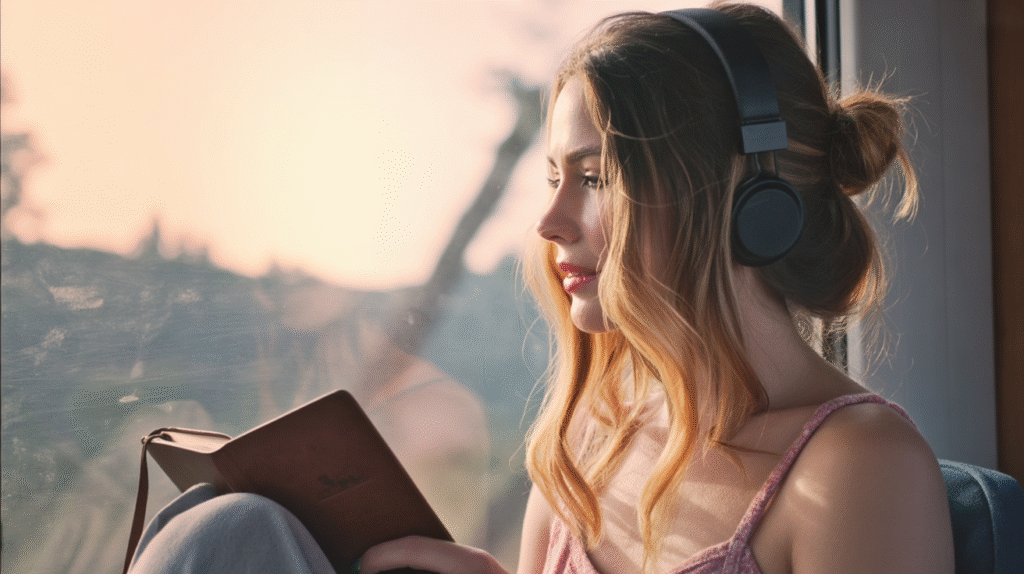
Why Solitude Is a Gift You Should Embrace
There’s a kind of stillness that only comes when it’s just you—no buzzing notifications, no one to impress, no timeline but your own. Solitude on the road can feel foreign at first. Maybe even lonely. But give it time, and it starts to soften you. Deepen you. Remind you that your own presence is not something to run from—but something to return to. Again and again.
Solitude Creates Space for Self-Connection
When the noise fades, you start to hear what you actually think. You notice your preferences. Your patterns. Your quiet joys. Solitude lets you meet yourself with honesty and presence—and that’s where real self-trust begins.
I remember one evening in a tiny apartment, no plans, no distractions, just me and the silence. At first, the quiet felt uncomfortable. My mind reached for background noise, for a message to check, for something to fill the space. But slowly, I began to notice what was underneath: the books I wanted to read, the meals I craved, the dreams that had been waiting patiently for my attention.
Solitude has a way of peeling back the layers of busyness. It doesn’t ask you to perform or please—it simply asks you to listen. And when you do, you realize how much wisdom has been inside you all along.
Self-connection doesn’t require more noise. It requires less. And in that quiet, you begin to trust your own voice again.
It Teaches You How to Hold Yourself Through Everything
When you cry on a long bus ride. When you celebrate alone in a café. When you book a one-way flight with no one waiting on the other side. Solitude teaches you that you can handle your own joy and your own pain—and still feel whole.
There was a bus ride once where tears came unexpectedly, memories rising I hadn’t faced in years. No one sat beside me to comfort me, no friend to distract me. It was just me, the window, and the rhythm of the road. And though it hurt, I got through it. Later that same week, I found myself raising a quiet toast to myself over dinner, celebrating a new client I had landed. Both moments—grief and joy—were mine to hold. And I did.
Solitude builds resilience. It teaches you that you are strong enough to be your own anchor, your own witness, your own cheerleader.
You don’t need someone beside you to validate your life. You can hold yourself through every season—and that is powerful.
Being Alone Isn’t Empty—It’s Expansive
Solitude gives you room to explore, reflect, create, wander. It gives you the space to stretch into your own life. And what fills that space is often not silence, but clarity. Vision. Peace. It’s not lonely—it’s liberating.
I felt this during a quiet afternoon spent walking along a riverbank. No companion, no agenda. Just the sound of water and the rhythm of my steps. The longer I walked, the more spacious I felt inside. Ideas arrived uninvited. My body softened. My mind expanded. What looked like “being alone” to others felt, to me, like being in dialogue with something larger.
Aloneness isn’t the absence of connection—it’s the presence of possibility. It gives you back time, energy, and creativity that might otherwise be scattered outward.
Being alone isn’t a void. It’s an opening. And when you step into it, you realize how much abundance solitude actually holds.
Solitude Sharpens Your Intuition
Without others’ voices constantly in your ears, your own inner compass gets louder. You stop outsourcing your decisions. You start following what feels aligned. And that’s how you build a life that’s not just free—but deeply yours.
I noticed this one morning while debating whether to extend my stay in a small town. My instinct said yes, but messages from friends suggested I move on. Instead of defaulting to their opinions, I chose to sit quietly with myself—journaling, listening, feeling. By evening, the answer was clear: I wanted to stay. And staying turned out to be one of the most meaningful choices of that season.
Solitude clears the static. It removes the noise of external influence and tunes you back into your own wisdom.
The more time you spend listening inward, the more confident you become in your choices. Intuition isn’t fragile—it’s steady. And solitude is what lets you hear it.
You Learn That You Are Already Enough
When you’re alone and still feel full? That’s power. Solitude lets you see that your wholeness never depended on being seen, liked, or chosen. It was always inside you—waiting to be remembered.
I realized this while eating breakfast alone in a bustling café. At first, I felt exposed—surrounded by groups, couples, laughter. But as I sipped my coffee and read my book, something shifted. I felt content. Whole. Not because anyone validated me, but because I could enjoy my own company.
Solitude teaches you the radical truth: you are already enough. You don’t need a witness to make your life valid. You don’t need someone’s presence to make your moments meaningful.
When you can sit with yourself and feel complete, you carry a kind of quiet power that no circumstance can take away.
Alone Time Turns Ordinary Moments Into Sacred Ones
When you’re alone, the simplest rituals take on a deeper glow. A morning coffee becomes a meditation. A quiet walk turns into prayer. Without conversation or distraction, ordinary acts feel fuller, like you’ve slowed the world down enough to taste it.
I felt this one evening while making a simple meal in a tiny kitchen. Just pasta, olive oil, and herbs. Normally I would’ve rushed through it, multitasking or chatting. But in solitude, I noticed everything—the sound of the garlic sizzling, the rhythm of stirring, the warmth of the bowl in my hands. That small, unremarkable dinner became one of the most grounding memories of my trip.
Solitude doesn’t require grand gestures. It’s about noticing what’s already here and letting it matter. The ordinary becomes sacred because you are fully present for it.
And once you experience that kind of presence, you start to realize you don’t need much at all to feel connected to your life.
Solitude Shows You That Belonging Starts Within
It’s easy to believe belonging is something others grant us—through friendships, love, or community. But solitude teaches you that belonging begins with yourself. When you feel at home in your own company, you carry belonging everywhere you go.
I noticed this after moving through several cities in quick succession. In each new place, the first nights felt disorienting. No familiar faces, no shared history. But instead of panicking, I leaned into my solitude—lighting a candle, journaling, listening to my favorite playlist. Slowly, I realized I didn’t need a crowd to feel at home. I could create belonging inside myself.
When you root into your own presence, you stop chasing external approval. Relationships become lighter, freer, because they’re no longer about proving your worth.
Solitude is the soil where self-belonging grows. And when you’ve cultivated that, you can step into any new space knowing you already belong—to yourself.
Closing Thought
Solitude isn’t something to survive—it’s something to cherish. It’s where you remember who you are beneath the noise. It’s where your voice gets clear and your heart gets softer. And it’s a gift you can carry with you anywhere.