7 Essentials Every Backpacker Digital Nomad Needs to Thrive
There’s a certain magic to living out of a backpack. With every item pared down to the essentials, life feels lighter, more intentional, and surprisingly abundant. For digital nomads, this simplicity comes with an added challenge: balancing minimalism with the tools needed to keep a career running smoothly on the road. It’s not about having everything; it’s about having the right things.
Many first-time backpacker nomads make the mistake of carrying too much or choosing the wrong gear, only to learn the hard way that bulk slows you down and weak links break when you need them most. The truth is, you don’t need an endless list of gadgets or clothes—you need a curated set of essentials that protect your body, your work, and your freedom.
These seven items form the backbone of a mobile lifestyle. They’re not flashy or excessive, but they earn their place in your pack by making daily life easier, safer, and more enjoyable. From a backpack that truly fits your frame to banking tools that keep your money safe across borders, these are the choices that transform chaotic travel into a lifestyle that feels sustainable and freeing.
1. A Durable, Ergonomic Backpack (40L or Less)
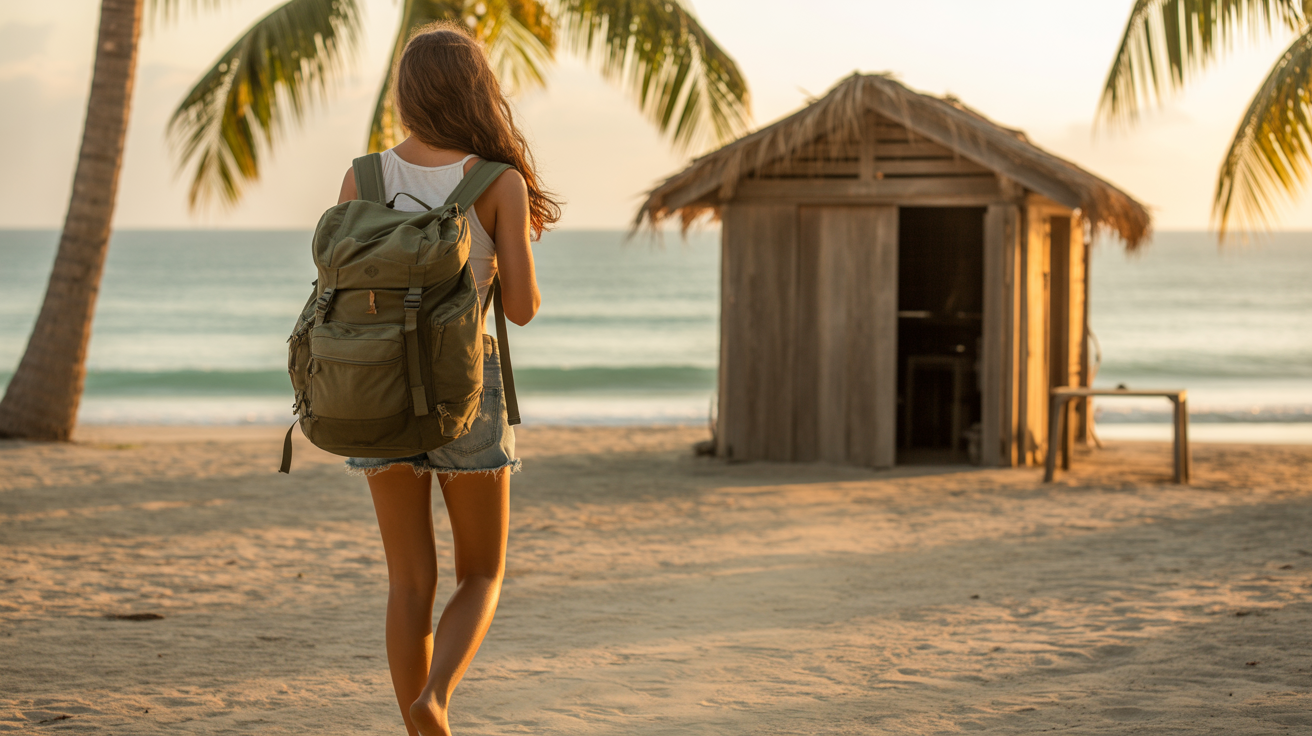
Your backpack isn’t just luggage—it’s your mobile home. Everything you own, everything you need to live and work on the road, sits on your shoulders. That’s why choosing the right pack is one of the most important investments you’ll make as a backpacker digital nomad. The wrong choice can leave you sore, frustrated, and constantly digging through clutter. The right one makes every journey smoother and lighter.
The sweet spot for most nomads is under 40 liters. Bigger packs tempt you to carry more than you need, while smaller ones force you into harsh compromises. Around 35–38L is often perfect: it’s compact enough to fit into overhead bins on flights, yet roomy enough for clothes, tech, and daily essentials. Look for weather-resistant fabric and lockable zippers to protect your gear, and a front-loading design so you can easily access items in hostels without unpacking everything.
Fit matters just as much as features. A good backpack hugs close to your back with padded hip straps that transfer weight from your shoulders. Try it loaded before buying—if it doesn’t feel comfortable after ten minutes, it won’t feel good after ten hours.
Pro tips:
- Choose weatherproof material and sturdy zippers for unpredictable conditions.
- Always test with weight before committing—it should feel like an extension of your body.
- Avoid top-loading hiking packs; a clamshell or suitcase-style design is far easier for frequent packing.
🌿 Takeaway: Your backpack sets the tone for your journey. Pick one that fits, protects, and simplifies your life, and you’ll feel freer with every step.
2. A Lightweight, Powerful Laptop
For a backpacker digital nomad, the laptop is more than a gadget—it’s your office, creative studio, and income source rolled into one. It has to strike the perfect balance: powerful enough to handle your workload but light enough to carry daily without feeling like a burden. Choosing the wrong machine—too heavy, too fragile, or underpowered—can turn even simple tasks into daily frustrations.
Portability is key. A 13–14″ screen offers enough space to multitask without tipping the scales. Pair this with a weight under 1.5 kg, and you’ll be grateful when walking through airports, climbing hostel stairs, or carrying your pack on long city days. Performance matters too. At least 16GB of RAM ensures smooth operation for multitasking, while solid-state storage (SSD) keeps your system fast and durable. Battery life is non-negotiable—aim for 8+ hours so you can work from buses, trains, or cafés without stress.
Protection is often overlooked. A slim, padded sleeve not only prevents damage in transit but also doubles as a lap desk on buses or hostel beds. Add lightweight noise-cancelling earbuds, and suddenly your “office” can be anywhere.
Pro tips:
- Choose ultralight laptops like MacBook Air M-series, Dell XPS 13, or Lenovo ThinkPad X1 Carbon.
- Invest in a protective sleeve; it saves you from knocks and doubles as a workspace.
- Prioritize battery life—you’ll regret cutting corners the first time you’re stuck without power.
🌿 Takeaway: Your laptop is your lifeline. Make sure it’s light, long-lasting, and strong enough to keep up with both your career and your travels.
3. Fast-Dry Clothes That Work Hard
Clothing is where most backpacker digital nomads overpack—and regret it later. The truth is, you don’t need much. A small rotation of versatile, fast-drying clothes will serve you far better than a bag stuffed with “just in case” outfits. Every piece should earn its space by working across multiple settings: a café workday, a hike, or a casual dinner with new friends.
The golden ratio? About three tops, two bottoms, and one jacket. Keep your color palette simple—neutrals and muted tones mix and match easily so you don’t feel like you’re wearing the same thing every day. Choose fabrics designed for travel: merino wool and technical blends are perfect because they breathe, dry quickly, resist odors, and layer well in different climates. Skip heavy denim, which takes forever to dry and weighs down your bag.
Accessories matter too. A lightweight scarf or sarong is one of the most multi-use items you can carry: it works as a modesty cover, a beach blanket, a light layer on chilly buses, or even an emergency towel.
Pro tips:
- Prioritize fabrics that are odor-resistant and quick to dry.
- Stick to a simple color scheme so everything matches.
- Choose clothes that feel good on both long-haul travel days and relaxed work sessions.
🌿 Takeaway: Pack less, choose smarter. Clothes that work hard for you mean lighter loads, easier laundry, and more energy for what really matters—your work and your adventures.
4. A Reliable Travel Insurance Plan
When you’re living out of a backpack, even small setbacks can feel huge. A stolen phone, a sprained ankle, or a sudden illness can derail your travels and your work if you’re not covered. That’s why travel insurance isn’t optional for backpacker digital nomads—it’s the safety net that protects your health, your gear, and your income.
I once met a freelancer in Peru who slipped while hiking and fractured her wrist. Without insurance, the hospital bill would have eaten her savings and forced her to fly home. Instead, her policy covered treatment and an emergency evacuation, allowing her to recover abroad without financial ruin. These stories are more common than you think, and they’re powerful reminders that preparation beats regret.
The best insurance for nomads is flexible and comprehensive. Look for plans that cover medical emergencies, theft, trip disruptions, and electronics. Make sure your laptop and phone are included—it’s not just about your health, it’s about protecting the tools that make your lifestyle possible. Keep digital and paper copies of your policy for easy access, and learn the claims process before you need it.
Pro tips:
- Choose insurance that covers medical, theft, and electronics.
- Save copies of your policy in the cloud and in your bag.
- Understand the process for emergency evacuation in remote areas.
🌿 Takeaway: Travel insurance may not feel exciting, but it’s the backbone of sustainable nomadism. With it, you gain confidence to explore fully—knowing that if the unexpected happens, you’re protected.
5. Digital Banking and Currency Cards
Few things disrupt a trip faster than money troubles. Hidden ATM fees, frozen accounts, or poor exchange rates can drain your budget and your patience. As a backpacker digital nomad, your banking setup needs to be as mobile as you are—reliable, secure, and designed to work across borders without nasty surprises.
The key is flexibility. Multi-currency accounts like Wise, Revolut, or N26 let you hold and spend in different currencies at fair exchange rates. Many also allow you to get paid directly in foreign currencies, which is a huge advantage for freelancers. With these tools, you can pay locally, withdraw cash, and move money around without being bled dry by fees.
Backups are just as important. Carry at least two cards from different providers and keep them in separate places—one in your wallet, one in your backpack or hostel locker. That way, if a card is lost, stolen, or frozen, you’re not stranded. App-based controls also make a difference: the ability to freeze or unfreeze your card instantly from your phone adds an extra layer of security.
Pro tips:
- Always keep two cards stored separately as backups.
- Choose accounts that auto-convert at fair rates and minimize ATM fees.
- Enable app-based security to lock or unlock cards instantly.
🌿 Takeaway: Digital banking isn’t just about convenience—it’s about survival. With the right cards and accounts, your money flows smoothly wherever you are, leaving you free to focus on the work and experiences that brought you on the road in the first place.
6. Compact Hygiene Kit with Natural Products
Backpacking as a digital nomad means sharing bathrooms, navigating airport security, and squeezing toiletries into already tight spaces. The secret isn’t to pack more—it’s to pack smarter. A compact, eco-friendly hygiene kit keeps you fresh, travel-ready, and TSA-compliant without weighing you down.
Start with solid formats. Shampoo and conditioner bars last months, don’t leak, and save you from liquid restrictions. A biodegradable soap bar can do triple duty: body, clothes, and even dishes in a pinch. Switching to solid deodorants and toothpaste tablets reduces bulk while also cutting down on waste.
For women, reusable options like menstrual cups or cloth pads save space and stress. They also eliminate the scramble of finding supplies in unfamiliar countries. And for everyone, a bamboo toothbrush, a microfiber towel, and a small rosewater or essential oil spray go a long way toward keeping your routine both light and refreshing.
Organization matters too. A small hanging toiletry bag turns cramped hostel sinks into a personal bathroom station. With everything visible and in one place, you spend less time digging and more time living.
Pro tips:
- Go solid wherever possible to avoid liquid rules.
- Choose biodegradable products to reduce your footprint.
- Use a hanging organizer to stay tidy in shared bathrooms.
🌿 Takeaway: Hygiene doesn’t have to be complicated or heavy. With a minimal, natural kit, you’ll feel clean, organized, and free to focus on the experiences—not your toiletries.
7. Offline Entertainment That Doesn’t Take Space
Life on the road is full of long bus rides, flight delays, and quiet evenings in hostel common rooms. Without a plan, those hours can feel empty—or worse, they can tempt you into endless scrolling that drains your energy. That’s where offline entertainment comes in. It keeps you grounded, inspired, and engaged even when Wi-Fi is nowhere to be found.
A Kindle or other e-reader is one of the best investments you can make. Thousands of books in one slim device means you’ll never run out of things to read, whether it’s novels for downtime or business books for growth. Pair this with a pair of headphones and downloaded playlists, podcasts, or language lessons, and suddenly travel days become opportunities instead of dead time.
Don’t underestimate analog tools either. A small journal or sketchbook offers something digital screens can’t: reflection and creativity without distraction. Some nomads even carry a pack of playing cards or a compact travel game to spark conversations with fellow travelers.
Pro tips:
- Download content in advance—never rely on airport Wi-Fi.
- Keep a lightweight notebook for reflections, ideas, or sketches.
- Store photos locally so you can edit them offline.
🌿 Takeaway: Entertainment doesn’t have to weigh you down. By curating a few lightweight, offline options, you transform downtime into some of the most rewarding parts of the journey.
Closing Thought
Backpacker nomadism isn’t about stripping life down to nothing—it’s about curating just enough to carry freedom on your shoulders. Every item you choose earns its place, not just for its practicality but for the peace of mind it gives you when plans shift, buses run late, or work deadlines meet border crossings.
When your pack is light, you move with ease. When your systems are simple, you work with clarity. And when your essentials are well-chosen, you don’t waste energy wishing for what you left behind—you’re too busy living the moment in front of you.
The seven essentials in this guide aren’t glamorous. They’re not meant to impress anyone scrolling through your feed. They’re meant to make sure you stay healthy, connected, and inspired, so the lifestyle lasts longer than the honeymoon phase.
Because the truth is, thriving as a backpacker nomad is less about what you carry on your back and more about what you carry in your mind: adaptability, intention, and a willingness to keep things simple. With those—and the right gear to support them—you can turn anywhere into home and any journey into a chapter worth remembering.