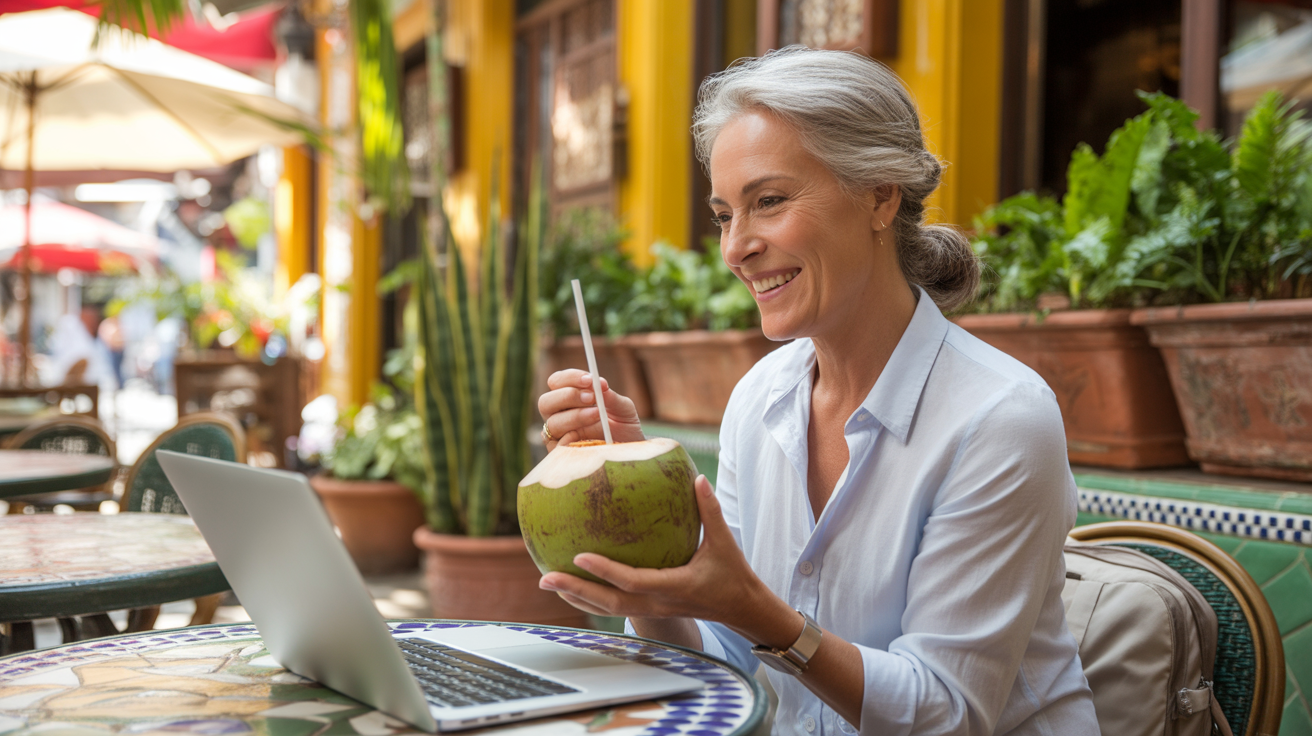
How I Became a Digital Nomad at 62 And Why It Was the Best Decision of My Life
I never imagined I’d be living out of a suitcase in my 60s. Not after a lifetime of stability—marriage, mortgages, Monday meetings. My days were once shaped by commutes and calendars, my identity tied to titles, routines, and responsibilities. That version of life had its rewards, but it was also predictable, sometimes painfully so.
Then one morning, not long after my 62nd birthday, I stood in my quiet kitchen in upstate New York, coffee in hand, and realized: I was free. No job. No kids at home. No one waiting on me. Just one question echoing louder than ever—what now?
At first, I thought about the traditional script: downsizing to a smaller house, filling my days with gardening, book clubs, and maybe a few volunteer hours. But something inside me wanted more. Not “more” in the sense of possessions or accomplishments—more in the sense of life. I wanted to feel wonder again, to step into places that would make me curious, clumsy, alive.
That morning was the beginning of an unexpected journey. A journey that has taken me across countries, through lessons I never saw coming, and into a version of myself I didn’t know was waiting. Here’s how I became a digital nomad at 62—and why it turned out to be the best decision of my life.
I Sold My Home, But Kept My Memories
When people hear I became a nomad at 62, the first question they often ask is, “But what about your home? Your things?” The truth is, letting go of a house and decades of belongings was one of the hardest parts of this journey—and also one of the most liberating.
I didn’t rush. I spent months sorting through every box, closet, and drawer. Some items went to charity, others to family, and a few special pieces to friends who would treasure them. I digitized photo albums, scanning images of birthdays, graduations, and road trips so the memories would always be with me, even if the physical books weren’t. For heirlooms, I sent handwritten notes along with the objects—explaining where they came from, what they meant, and why I wanted that person to have them. Those little letters carried more weight than the items themselves.
It was emotional. I cried while sealing boxes, laughed at long-forgotten keepsakes, and sometimes froze with indecision. But with every bag donated, every shelf emptied, I felt lighter. I realized that what I thought defined me—the furniture, the decorations, the drawers full of “someday” projects—was just… stuff. My life wasn’t shrinking by letting go; it was expanding.
Selling the house itself was another milestone. It wasn’t just a building; it was the backdrop of my adult life. But I reminded myself that walls and windows don’t hold love—people and memories do. By the time I handed over the keys, I didn’t feel loss. I felt possibility.
🌿 Lesson: Freedom doesn’t come from escaping your past; it comes from honoring it, then letting go.
Downsizing wasn’t about erasing who I was. It was about creating space for who I could become. And walking away with nothing but a carry-on, a laptop, and a heart full of memories, I felt more ready for the next chapter than I had in years.
My First Destination Wasn’t Exotic, It Was Familiar
When people imagine the start of a nomadic life, they picture something bold and dramatic—Bali, Bangkok, or the beaches of Costa Rica. My beginning was far simpler: Portugal.
I had visited Lisbon years before, on a short vacation, and I remembered how it made me feel—safe, warm, and unhurried. The tiled alleys, the scent of roasted chestnuts, the sound of Fado drifting out of small restaurants. It wasn’t unfamiliar, and that was exactly what I needed. I didn’t want my first leap to feel like a freefall; I wanted it to feel like a soft landing.
So I booked a two-month stay in a small apartment in the Alfama district. It had reliable Wi-Fi, a market around the corner, and a tram stop at the end of the street. Nothing glamorous—just comfortable. That comfort gave me room to test this lifestyle without feeling overwhelmed. I could explore the city in the mornings, return to my desk for writing and calls in the afternoons, and still have energy left for long, meandering dinners by the river.
Friends asked why I didn’t pick somewhere “more adventurous.” But here’s the truth: your first destination doesn’t have to prove anything to anyone. It only has to feel right in your body. For me, Lisbon felt like a homecoming—a place where I could start building confidence before stretching further.
Those first two months taught me an important lesson: ease matters. By starting in a place where I felt secure, I gave myself space to adapt to the rhythms of travel—figuring out grocery shopping in a new language, learning to navigate public transport, understanding how it feels to live without a fixed address. If I had gone straight into a chaotic or high-stress destination, I might have given up too soon.
🌿 Lesson: Your first destination doesn’t have to be daring. It just has to feel good in your body.
Looking back, I’m grateful I chose familiarity over flash. That decision gave me the foundation to keep going—and the courage to keep choosing places that felt like “yes,” even when they weren’t the most obvious choice on the map.
I Had to Learn the Language of Technology
If you had told me ten years ago that I’d be tossing around words like VPN, eSIM, and cloud storage, I would have laughed. Technology was never my strong suit. I used my computer for emails, the occasional recipe, and not much else. But once I stepped into nomadic life, I realized that learning tech wasn’t optional—it was my ticket to freedom.
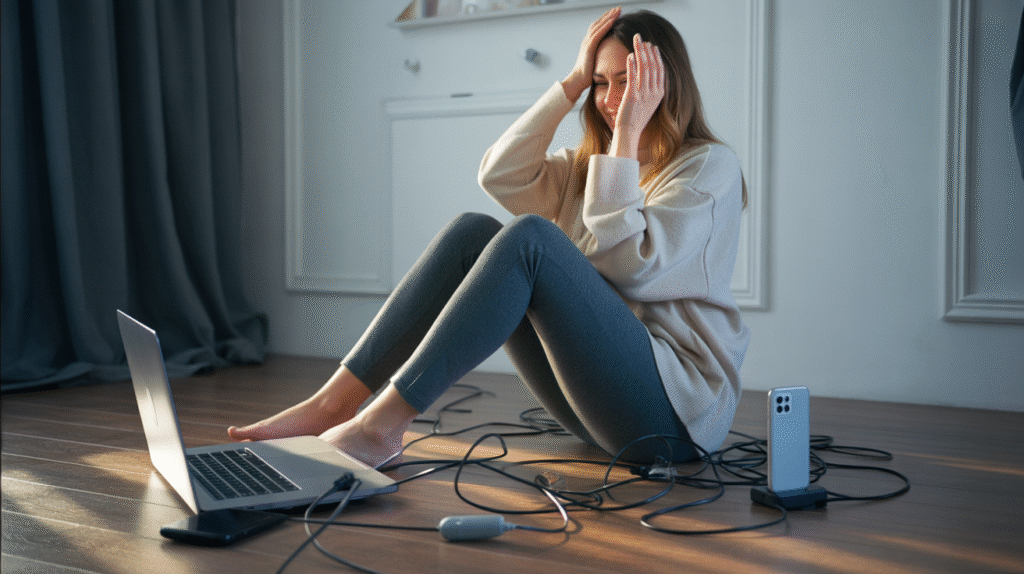
At first, it was overwhelming. Booking flights online, managing banking apps, and figuring out international phone plans felt like learning a new language. And in a way, it was. Technology had its own vocabulary, its own rules, and its own set of frustrations. I stumbled. I googled endlessly. I asked younger nomads for help. But little by little, I got it.
I learned how to use VPNs to safely access my accounts abroad. I discovered eSIMs that let me connect instantly without hunting down local SIM cards at airports. I set up budgeting apps that tracked my spending in multiple currencies, helping me stay within my retirement budget. I even learned how to back up photos to the cloud so I wouldn’t lose precious memories if my laptop ever failed.
The shift wasn’t just practical—it was empowering. Every new skill reminded me that I wasn’t “too old.” I was just new to it. And there’s a difference. Being a beginner again was humbling, but it was also energizing. It gave me the same spark of pride I felt decades ago when I learned to drive, or when I mastered my first professional role.
The bonus? Technology became a bridge. Younger travelers were more than willing to help me figure things out, and in exchange, I shared my own life experiences. Those exchanges turned into friendships across generations, built on mutual curiosity and respect.
🌿 Lesson: You’re not too old to learn. You’re just new to it. And that’s exciting.
Now, instead of feeling intimidated by tech, I see it as part of my toolkit—just like my passport or my suitcase. It doesn’t make me less authentic; it makes me more independent. And at 62, learning to thrive in a digital world was proof that growth doesn’t have an age limit.
I Got Lonely And Then I Got Real
No one talks enough about loneliness in the nomadic lifestyle. It hit me hard during my first winter in Spain. It was a gray Sunday in Barcelona—rain tapping on the balcony railings, cafés closed until late, the streets unusually quiet. I sat with a cup of tea, scrolling through photos of my grandchildren back home, and the emptiness settled in. For the first time since leaving, I wondered: had I made a mistake?
But instead of running from the feeling, I let myself sit with it. I journaled. I admitted that yes, I missed the comfort of familiarity, the ease of being surrounded by people who had known me for decades. The honesty was uncomfortable, but it was also clarifying. Loneliness wasn’t a sign that I had failed—it was a sign that I needed to nurture connection in new ways.
So I started small. I joined a cooking class where I chopped vegetables alongside travelers from five different countries. I found a language exchange group at a café, where locals and expats laughed through mispronunciations over glasses of wine. I struck up conversations in markets, even if it was just to ask for recipe advice. Slowly, the emptiness softened. What began as loneliness turned into community.
The truth is, loneliness doesn’t disappear just because you’re on the road. But it shifts when you face it honestly. Some days, connection looked like dinner with strangers who quickly became friends. Other days, it looked like connecting with myself—walking in the rain, writing in cafés, or simply giving myself permission to feel without judgment.
For retirees, this can feel especially daunting. You’re leaving behind established circles, stepping into places where no one knows your history. But that’s also the gift: you get to show up as you are now, not who you used to be.
🌿 Lesson: Loneliness isn’t a failure. It’s a reminder to open up—first to yourself, then to others.
That rainy Sunday in Barcelona didn’t push me home. It pushed me deeper—into community, into vulnerability, and into a truer version of myself. And looking back, I’m grateful for it. Without that moment, I might never have discovered just how much connection waits when you’re brave enough to seek it.
My Body Surprised Me in the Best Way
Before I left, I worried about whether my body could handle this lifestyle. In my 50s, my knees ached often, I slept poorly, and I carried the quiet fatigue of years spent behind desks and steering wheels. At 62, I thought travel would wear me down further. Instead, it woke me up.
From my very first weeks in Lisbon, I noticed the difference. I was walking everywhere—up steep cobblestone streets, through markets, along river promenades. At first, my legs complained, but within weeks, I felt stronger. My balance improved, my endurance grew, and the stiffness I used to carry in my joints started to fade. Movement was no longer something I had to schedule—it became part of daily life.
Food changed too. I swapped processed convenience meals for fresh market produce, regional specialties, and smaller, slower meals. I found myself savoring flavors instead of rushing. Combined with the walking, the weight I had carried for years began to lift, both physically and emotionally.
Sleep came easier as well. Days shaped by movement and exploration left me pleasantly tired at night, and without the constant background stress of work deadlines, I rested more deeply. Even my mood shifted—I smiled more, laughed more, and felt lighter in ways I hadn’t expected.
Of course, there were challenges. Some hikes left me breathless, some long travel days drained me, and occasionally I had to listen to my body and take a full day of rest. But instead of feeling limited by age, I felt in partnership with it. I was learning what fueled me, what tired me, and how to recover wisely.
The greatest surprise was this: I didn’t just feel capable—I felt vibrant. Stronger than I had in my 50s, more energized than I’d been in decades. Nomadic life didn’t deplete me; it rebuilt me.
🌿 Lesson: Movement, purpose, and awe are the best medicine.
At 62, I discovered that my body wasn’t winding down—it was waking up. And every step on a new street, every trail overlooking the sea, reminded me that it’s never too late to feel alive in your own skin.
I Redefined What “Home” Means
For most of my life, “home” was a fixed address. It was a mortgage, a mailbox, a kitchen painted just the right shade. It was the place where photos hung on walls, where family gathered for holidays, and where I returned after every trip. Letting go of that definition was one of the hardest mental shifts of becoming a nomad. But once I did, I discovered something much deeper.
At first, I thought I’d miss the permanence—the stability of knowing where every item belonged. And yes, there were moments when I longed for the familiarity of my old kitchen or the garden I once tended. But as I moved through Portugal, Spain, and beyond, I started to see that home wasn’t about permanence at all. It was about presence.
I began creating small rituals that grounded me wherever I was. Lighting a travel candle in an Airbnb. Brewing tea in the mornings before opening my laptop. Writing a single line in my journal at night about something that made me smile that day. These rituals stitched together a sense of belonging no matter the city, country, or continent.
Home also became about people. A dinner with new friends in Barcelona, a language exchange in Tbilisi, a long video call with my grandchildren back in New York—each of these moments felt just as much “home” as any physical place I’d lived. Instead of anchoring myself to a house, I was anchoring myself to connection, to experience, to meaning.
My possessions shrank to what could fit in a carry-on and a backpack: clothes, a laptop, a few spices I couldn’t live without, my journal. And surprisingly, that was enough. In fact, it was more than enough—it was freedom.
🌿 Lesson: Home isn’t a place. It’s how you treat yourself in unfamiliar ones.
Now, when someone asks me where home is, I smile. Home is Lisbon cafés, Georgian rooftops, Mexican mercados. Home is wherever I light that candle, open my journal, and decide to be fully present. It’s not where I live—it’s how I live. And for me, that’s more grounding than four walls ever were.
Closing Thought
Becoming a digital nomad at 62 didn’t erase my age—it expanded it. I don’t feel younger; I feel more alive. The milestones of my past—career, parenting, home ownership—will always be part of me, but they no longer define what’s possible. What I’ve learned is that freedom isn’t about erasing responsibility; it’s about meeting this stage of life with curiosity instead of fear.
There are still challenges. Flights get delayed. Wi-Fi cuts out. Some days are lonely. But the trade-offs are worth it. I’ve walked trails I never thought I’d see, shared meals with strangers who became friends, and watched sunsets from balconies I never imagined would be mine, even temporarily. Each of those moments reminds me that “too late” is a myth we tell ourselves when we’re scared to change.
At 62, I stopped chasing time and started meeting it—on quiet mornings with tea, on bustling city streets, on long calls with my grandchildren as I show them the world through my lens. If you’re wondering whether it’s too late for you, let me say this: it isn’t. It might just be exactly the right time.