Why Working in Pajamas is the Future of Remote Work
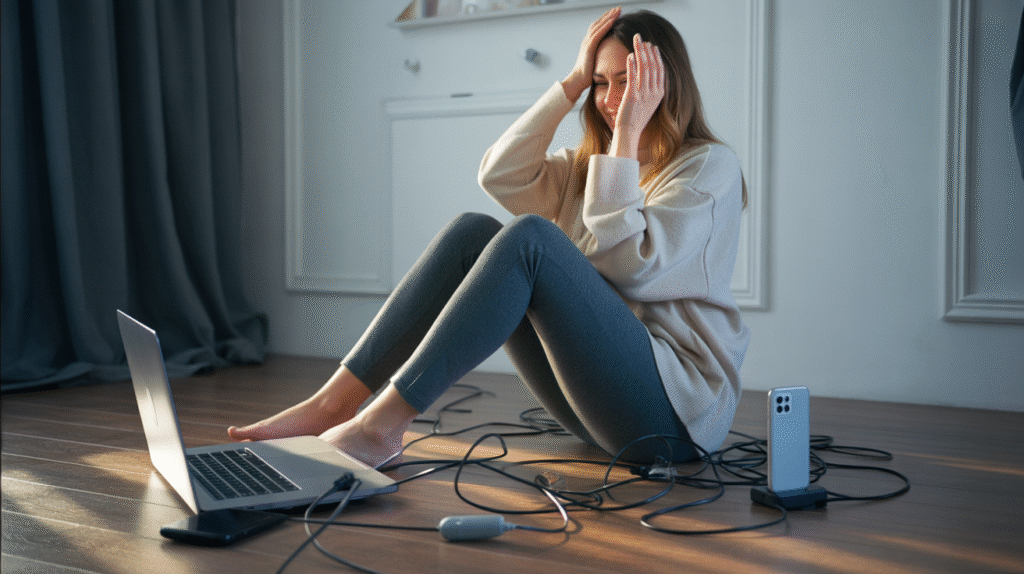
Forget the blazers and boardrooms—freedom smells like coffee, feels like bare feet on cool tile, and sometimes looks like your favorite oversized t-shirt. Working in pajamas isn’t lazy. It’s liberation. It’s the quiet revolution of women building businesses, pitching clients, and editing videos with soft clothes, soft lighting, and soft self-trust. This isn’t about dress codes—it’s about rewriting the rules of what “professional” feels like.
Pajamas Are the Symbol of a Softer Work Culture
We’re done performing productivity in stiff clothes and artificial spaces. Pajamas represent a shift from pressure to presence. A world where comfort is no longer the enemy of success.
The pandemic cracked open a truth we had been ignoring: productivity has never lived in the collar of a shirt or the pinch of a pair of shoes. It lives in focus, in flow, in the freedom to bring your whole self to your work. Pajamas have become the playful emblem of this cultural shift. They remind us that success doesn’t need to look uncomfortable to be valid. It can be soft. It can be lived-in. It can be human.
The choice to wear pajamas while working isn’t laziness—it’s rebellion against a system that equated discomfort with discipline. It’s a quiet declaration: “I don’t have to suffer to create value.” And that reframe changes everything. When you stop performing productivity and start living it, your energy becomes more sustainable.
This isn’t really about the fabric on your skin. It’s about what that fabric represents: an invitation to let go of outdated expectations and lean into work that fits your life, not the other way around. Pajamas are just the symbol—but the movement behind them is about choosing presence over performance.
So next time you slip into your comfiest pair before logging in, don’t feel guilty. Feel proud. You’re part of a culture rewriting the rules of how we define success. And softness, it turns out, can be just as powerful as structure.
They Help You Create a Safe, Honest Work Environment
When you’re relaxed, your nervous system feels safe. And when your body feels safe, your creativity flows. Pajamas help you tap into intuitive productivity instead of fear-driven output.
Think about how your body feels in an office: shoulders tight, shoes pinching, a low-level hum of tension that never really leaves. Now compare it to sitting cross-legged on your couch in soft cotton, a mug of tea nearby, and your laptop open. One environment tells your nervous system to stay guarded. The other signals: you are safe. And safety is the soil where creativity grows.
This isn’t about indulgence—it’s about biology. When your body relaxes, your brain leaves survival mode and enters a state where ideas can surface more easily. You’re not wasting energy on discomfort; you’re channeling it into focus and imagination. Pajamas, in this way, aren’t just clothes. They’re part of the ecosystem of an honest, supportive work culture.
And honesty matters. When you’re not preoccupied with how you look, you show up more authentically. You ask questions you might’ve swallowed. You admit when you’re tired. You create from a place of presence, not pressure. This shift ripples outward, shaping teams and collaborations that feel more human.
If pajamas aren’t your thing, find the version that is—whatever clothing signals “safe” to your body. The point is not the outfit itself but the feeling it unlocks. Work that flows from safety, rather than fear, is always the work that lasts.
It’s Not About the Clothes—It’s About the Choice
The beauty of remote work isn’t where you work—it’s how much of you gets to come with you. If wearing pajamas helps you feel aligned, focused, and real—you’ve already won.
At its core, this isn’t a story about fashion. It’s a story about permission. Pajamas symbolize choice—the radical ability to decide for yourself how you want to show up. That choice is what remote work gifted us: autonomy over our bodies, our spaces, our rhythms. And in that autonomy, productivity feels less like something imposed and more like something chosen.
What you wear simply becomes an extension of that truth. For one person, it’s yoga pants and bare feet. For another, it’s still a blazer and lipstick, even at home. Neither is wrong. The power lies in the freedom to choose without fear of being judged as “less professional” for prioritizing comfort or authenticity.
This shift also dissolves performance culture. You stop worrying about appearances and start focusing on substance. Meetings become less about how polished you look and more about what you bring to the table. Your energy, your voice, your ideas take center stage.
So whether it’s pajamas, jeans, or a dress that makes you feel unstoppable, the deeper win is this: you no longer need external approval to validate your way of working. You’ve already redefined what success looks like. And it looks a lot like choice.
Comfort Unlocks Confidence
When you’re not fussing with waistbands or heels, you remember what actually matters: your voice, your ideas, your energy. You show up with clarity, not discomfort.
Confidence often has less to do with how you look and more to do with how free you feel. When you’re tugging at fabric, shifting in your chair, or worrying about appearances, part of your energy leaks away. But when you’re at ease, fully comfortable in your skin, you have more space to direct your focus where it matters. Pajamas embody that shift. They strip away the distraction so you can show up more fully as yourself.
Think of the difference between a meeting where you’re silently adjusting your clothes versus one where you’re settled, cozy, and grounded. In the second, your body is an ally instead of an obstacle. You’re not managing discomfort—you’re channeling clarity. And clarity always feels like confidence.
The irony is that for years, we were told the opposite: that stiff formality created authority. But authority rooted in discomfort is fragile. True confidence is built on presence, not posture. And when you feel good in your body, you naturally carry yourself with more ease and strength.
The lesson is simple: comfort isn’t the enemy of confidence. It’s the foundation. When you let go of unnecessary constraints, you create space for the real markers of professionalism—clarity, contribution, connection—to shine.
We’re Redefining What Professionalism Looks Like
Professionalism used to mean suits and silence. Now, it means presence. Accountability. Authenticity. Pajamas are just one (adorable) symbol of the deeper truth: we get to do this differently now.
For decades, professionalism was equated with conformity—dress codes, rigid offices, a narrow idea of what “serious” looked like. But as work has shifted into living rooms, cafés, and co-living spaces, the old markers have lost their meaning. Professionalism is no longer about the costume you wear—it’s about the commitment you bring.
Showing up in pajamas doesn’t make your work less valid. If anything, it shows that results matter more than appearances. This doesn’t mean lowering standards; it means elevating the right ones. Integrity. Reliability. Creativity. Respect. These qualities can be delivered in silk pajamas or tailored suits. The fabric doesn’t define the worth—the work does.
This redefinition also invites inclusivity. When the pressure to “look professional” softens, more people feel able to bring their authentic selves into the room. Professionalism stops being about performing and starts being about showing up with honesty.
So yes, pajamas are playful. But they’re also symbolic. They remind us that professionalism is evolving—that we’re allowed to create a culture where comfort and credibility coexist. And in doing so, we create workplaces that feel not just efficient, but human.
Closing Thought
Pajamas aren’t the goal—they’re the gateway. To softness. To sovereignty. To a world where you don’t have to squeeze yourself into outdated molds to be seen, respected, or paid. The future of remote work is comfort-led, soul-aligned, and beautifully undone. And it might just start with the clothes you wear when no one’s watching.